/f/84976/1003x1003/cd04f110a6/how-to-translate-your-small-business-website-in-5-simple-steps-index.png)
Expanding your business beyond borders doesn’t have to mean starting from scratch. Turning your website into a multilingual experience can unlock new markets, strengthen your brand, and attract customers worldwide.
76% of online shoppers prefer to buy products with information in their native language, and 40% will never purchase from a website not available in their own language. Language is not just communication; it is trust. It shapes how people perceive value, credibility, and connection with your brand.
Less than 26% of internet users speak English as their first language, yet nearly 59% of online content remains in English. This creates a major opportunity for businesses that localize their websites and communicate with their audience in their preferred language.
Multilingual content helps you connect personally with international audiences, improving engagement, boosting SEO visibility, and building lasting relationships based on cultural understanding. When visitors feel at home with your content, they stay longer, explore deeper, and buy more confidently.
In this article, we’ll guide you through five simple steps to make your website multilingual and ready for global growth. You’ll discover how to plan, translate, and localize effectively with tools like MotaWord Active, which makes professional website translation fast, affordable, and effortless. Let’s get started!
Your Roadmap to a Multilingual Website
Before diving into the detailed steps, here’s a quick overview of what the process looks like, how long each stage usually takes, and what tools or expertise you’ll need along the way. This roadmap will help you plan strategically, stay organized, and set realistic expectations for your multilingual website project.
| Step | Description | Estimated Time | Useful Tools / Tips |
|---|---|---|---|
| 1. Identify Target Markets and Languages | Analyze traffic data, research target regions, and choose the most relevant languages for your business. | 1–2 days | Use analytics and social insights to find where your international audience is growing. |
| 2. Prepare Your Website for Translation | Make sure your CMS and website structure support multilingual content, localized SEO, and smooth integration with translation tools. | 2–4 days | Ensure your site is compatible with MotaWord Active for seamless translation and updates. |
| 3. Choose the Right Translation Solution | Select a translation service that matches your goals, budget, and content volume without sacrificing quality or consistency. | 1–3 days | MotaWord Active offers fast, affordable, and collaborative website translation services. |
| 4. Localize Your Content | Adapt text, visuals, and cultural elements to resonate with each target audience while maintaining brand consistency. | 3–7 days (per language) | Follow MotaWord’s localization best practices and style guidelines for culturally relevant translations. |
| 5. Test, Optimize, and Maintain | Review your translated pages for layout, accuracy, and functionality. Track performance and keep your multilingual content updated. | Ongoing | Use analytics tools with MotaWord’s ongoing website translation services to maintain consistency and performance. |
Now that you have a clear picture of what to expect and how much time to invest, let’s explore each step in detail and learn how to make your website multilingual efficiently and effectively.
Multilingual—Fast
1. Step One: Identify Your Target Markets and Languages
Before you start translating your website, take the time to understand where your international growth potential truly lies. A well-planned strategy saves time, reduces costs, and ensures your translations reach the right audience.
Start by analyzing your website traffic and user behavior. Tools like Google Analytics, Search Console, and social media insights can help you identify which countries are already showing interest in your products or services. Look at metrics such as traffic by country, conversion rates, and time spent on site to uncover hidden international opportunities.
Once you know where your visitors are coming from, choose your target languages based on data and demand. Consider not only population size but also purchasing power, cultural compatibility, and how well your product or service fits local needs.
Understanding cultural nuances is essential. A simple translation may not be enough if your message doesn’t align with local expectations or communication styles.
- Pro tip: Start with one or two markets before expanding further. This allows you to refine your workflow, test your localized content, and build a scalable process using MotaWord Active to manage your translations efficiently.
2. Step Two: Prepare Your Website for Translation
Once you know your target markets, the next step is to prepare your website for multilingual content. This stage ensures that your site can handle different languages, layouts, and cultural variations smoothly and professionally.
Start by reviewing your website structure. Decide whether you’ll use subdomains, subdirectories, or separate domains for your multilingual versions. Each structure has its advantages, but consistency is key for SEO and user experience.
Choose a content management system (CMS) that supports multilingual functionality. Most modern platforms include multilingual plugins or built-in features that make managing translations easier. Your goal is to make updates and translations scalable without rebuilding your website from scratch.
Design flexibility is also crucial. Text length can vary between languages, and some languages, such as Arabic or Hebrew, read from right to left. Make sure your website layout, fonts, and design elements can adjust seamlessly to maintain readability and visual balance.
Finally, don’t overlook SEO. Implement hreflang tags to signal language and regional targeting to search engines, and create localized metadata for each version of your site. MotaWord’s website translation services can also help you maintain consistency and accuracy during this setup phase, saving valuable time as you expand globally.
Languages to Start With?
3. Step Three: Choose the Right Website Translation Solution
With your website ready for multilingual content, the next step is choosing how to translate it. The right approach can transform your site from a single-language platform into a global experience that feels local in every market.
There are three main translation models. The first is manual translation, handled entirely by professional linguists. It delivers excellent accuracy and cultural nuance but can take more time and budget for larger websites. The second is machine translation, which offers speed and affordability but often lacks tone, context, and emotional impact.
The third and most effective model for growing businesses is the managed or hybrid translation service, which combines human expertise with technology for speed, quality, and consistency. This is the model we use at MotaWord.
We’ve built a collaborative, cloud-based system that allows multiple professional translators to work together in real time, ensuring accuracy, speed, and stylistic consistency. Our process is designed to make website translation fast, affordable, and scalable for startups and small businesses. You can learn more about how we support startups in our article on translation for startups, and discover how we approach website localization to help brands connect authentically with global audiences.
At MotaWord, we help small teams translate their websites efficiently, reduce costs, and reach international customers faster. With our website translation services, you can go global in days, not weeks.
When a Multilingual Website Needs More Than Manual Updates
For many growing businesses, the first multilingual launch is only the beginning. As you add new landing pages, blog posts, product updates, and support content, translation can quickly become an ongoing operational workflow rather than a one-time project. That is where connected systems start to matter. If you want to see how translation can plug into the tools and platforms your team already uses, explore our API-related integrations. And if you want a broader look at how businesses automate website, software, and document localization as they grow, read our guide to translation APIs for business.
4. Step Four: Localize Your Content Beyond Translation
Once your website content has been translated, the next step is localization. This is where your message transforms from simply being understood to truly resonating with your audience. Localization goes beyond words to adapt your entire digital experience to each culture.
At MotaWord, we believe the difference between translation and localization is connection. Translation communicates meaning accurately, while localization ensures that meaning feels natural and culturally appropriate to every visitor. We focus on helping your brand sound like a local, not a translation.
Effective localization means more than language adaptation. We adjust currencies, measurements, and references so your content aligns with local norms. We also consider visuals, colors, and even calls to action to ensure they feel relevant to each audience. What appeals to a customer in France may not have the same effect in Japan or Brazil.
Our team maintains your brand voice across every language, ensuring consistency while adapting tone and phrasing to fit cultural expectations. Details like word choice, imagery, and offers such as “Free Shipping” can be fine-tuned to align with regional preferences.
We approach localization as a partnership, helping you create multilingual content that engages, builds trust, and truly connects across markets.
5. Step Five: Test, Optimize, and Maintain Your Multilingual Website
Launching a multilingual website is an exciting milestone, but the work does not end there. To ensure long-term success, you need to test, measure, and continuously optimize your translated content.
At MotaWord, we recommend starting with a full review of your translated pages. Check layout, design, and functionality to make sure each language version looks and performs as well as your main site. Readability and user experience are just as important as accurate translation.
Next, track your performance by language. Analyze key metrics such as bounce rate, conversion rate, and average session duration. This helps you identify which markets are performing well and which may need further localization or design adjustments.
Collect feedback from international visitors and native speakers. Their insights can reveal small issues that automated tools might miss and help refine the overall experience.
Keep your translated content updated whenever you make changes to your primary site. Consistency ensures that every visitor, no matter their language, gets the same up-to-date experience.
We also encourage implementing localized SEO strategies to improve your visibility in international search engines such as Baidu, Yandex, and Naver. Regular testing and optimization keep your multilingual website performing at its best.
Common Challenges (and How to Avoid Them)
Focus: Build trust and authority by acknowledging pain points.
- Inconsistent terminology → Use glossaries and translation memories.
- SEO mistakes → Always include localized keywords and hreflang attributes.
- Poor quality translations → Avoid pure machine translation without human review.
- Cultural missteps → Involve local reviewers or native speakers when possible.
Why MotaWord Is the Right Partner for Your Website Translation
Expanding your business globally requires more than word‑by‑word translation. It’s about creating a website experience that feels native across cultures. At MotaWord, we simplify this process so you can focus on growth.
We combine human expertise with a modern, cloud‑based platform that supports over 110 languages and taps into a network of 26,000+ professional translators. We offer features such as translation memories, glossaries, style guides, and real‑time tracking so your brand voice stays consistent and your translation workflow remains efficient. motaword.com
Our “Active” product is designed specifically for multilingual websites. It handles everything from text and multimedia to CSS and fonts, so your site looks and functions correctly in every language and region. motaword.com
We know common translation challenges, such as inconsistent terminology, SEO missteps, and cultural misalignment. We build our services to avoid them. With transparent pricing, no minimum fees, and integration options (WordPress plugin, API, CMS connectors), we enable small teams to launch multilingual websites without over‑complication. wordpress.org
Ready to begin? Try our free plan or start with a 14‑day free trial to experience how quickly you can translate your website and reach international customers with confidence.
in Days, Not Weeks?
Start Your Multilingual Journey Today
Translating your website is one of the smartest, most cost-effective ways to attract international customers and grow your business globally. By expanding your reach into new markets, you create more opportunities for conversions and build a stronger, more credible brand.
With the right tools like MotaWord’s translation services for startups, going global has never been easier. Our platform makes it simple to translate your website quickly, affordably, and with high accuracy, ensuring that you connect with international audiences effectively.
Ready to take your small business global? Try MotaWord and see how fast and affordable professional website translation can be. Start your journey today and unlock global growth with ease!
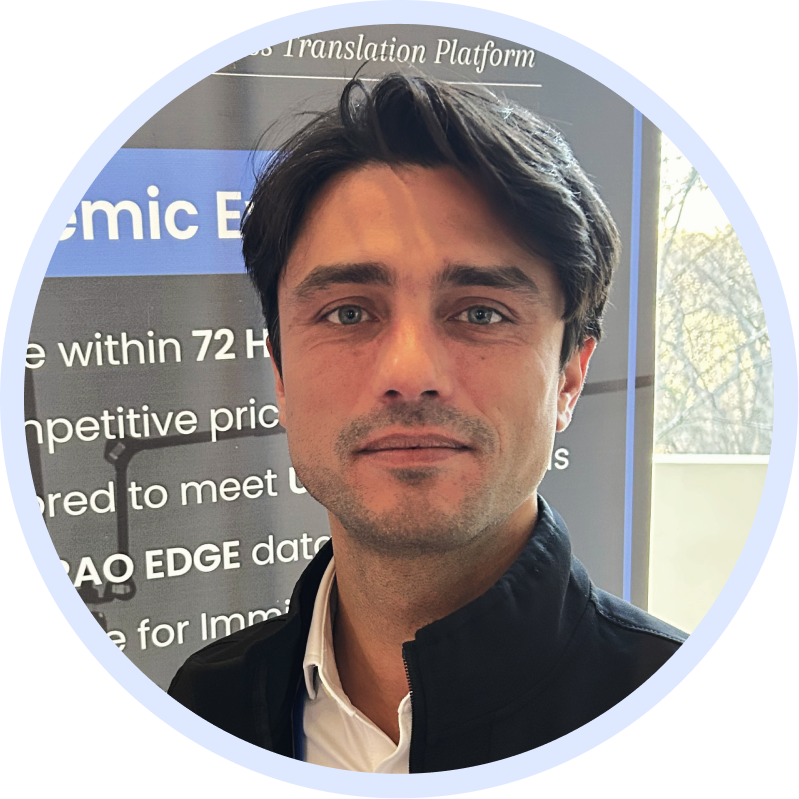
Oytun TEZ - Chief Technology Officer (CTO) at MotaWord
Translation studies scholar with a thesis on machine translation — overall technologist and obsessed with smart, seamless translation flows.